
Painting Glossary
The words on your painting estimate, explained
Some trade words are simple. Some change your price. Here is what each one means on a Ryan Painting estimate.

Read it top to bottom
Your estimate, decoded
Every Ryan Painting estimate has the same five parts. These are cut from a real one with the client details changed.
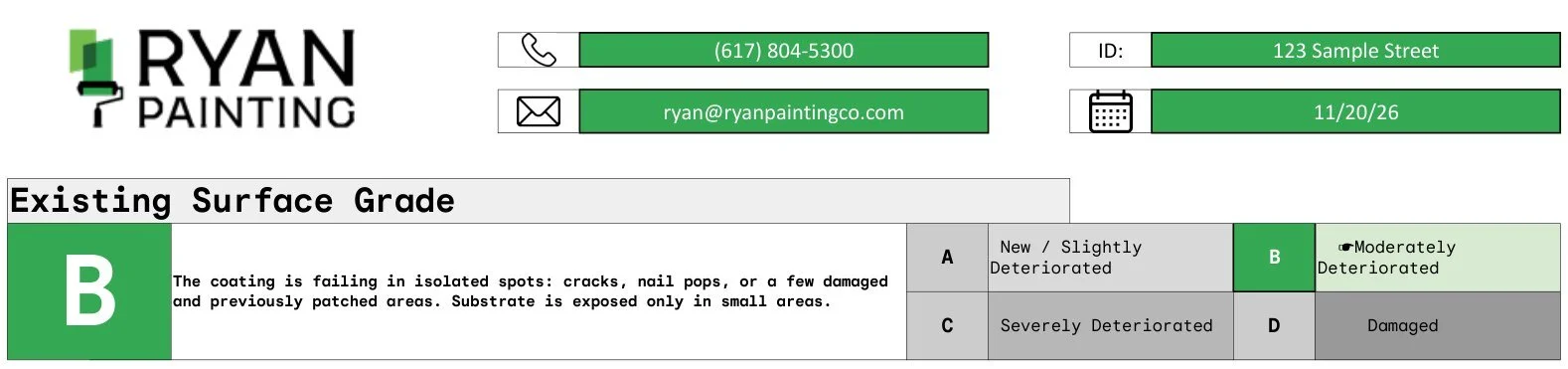
1. Existing Surface Grade
- The condition of your surfaces today, N to D
- Condition only, not what we will do about it
- One of the biggest drivers of price

2. Work Description
- Room by room: what we prep and paint
- Notes call out anything extra or left out
- Not listed means not in the price

3. Level of Surface Preparation
- How far the prep goes before any paint
- Homeowner Standard is in your quoted price
- Rental Ready costs less, Restoration Grade more

4. Project Recap
- A price for every room and every line
- Ticks show which surfaces are included
- Counts of doors, windows and feet of trim

5. Your Home Investment
- 30% deposit at signing locks your price
- Balance when the job is done
- Over $10,000: 30% / 30% / 40%
Also on your paperwork
Box 1 on your estimate
Surface grades
Set at the walkthrough. The grade describes condition. Your prep level decides what we do about it.
- Grade N: New
New drywall, a fresh skim coat, factory-primed siding or bare wood. Little or no paint history.
- Grade A: Slightly deteriorated
Paint fully intact with light wear: scattered nail holes, scuffs, light fading or chalking.
- Grade B: Moderately deteriorated
Paint failing in isolated spots: cracks, nail pops, a few old patches. Bare surface only in small areas.
- Grade C: Severely deteriorated
Failure is widespread: peeling across large areas, bare wood in many places, caulk failed throughout.
- Grade D: Damaged
The surface itself is damaged: loose plaster, water-damaged drywall, rot, split or missing boards. Repairs are priced separately.
Box 3 on your estimate
Prep levels
Every job is sold at a documented prep level, named on your estimate. Nothing gets primed until the prep passes its test.
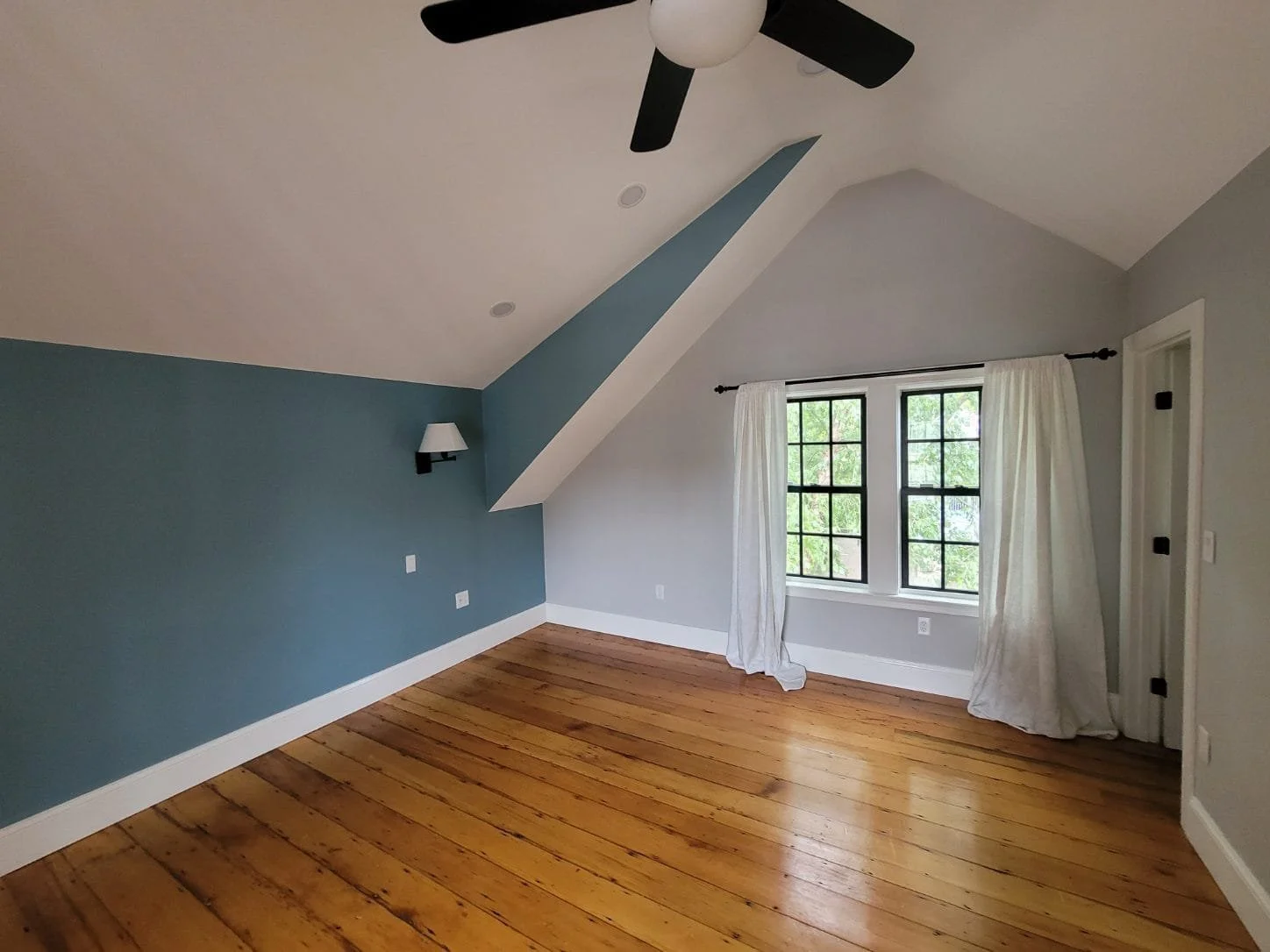
Rental Ready
Cost 1 of 3- Loose paint off, small holes and dings filled
- Trim gaps caulked, bare spots spot-primed
- One finish coat
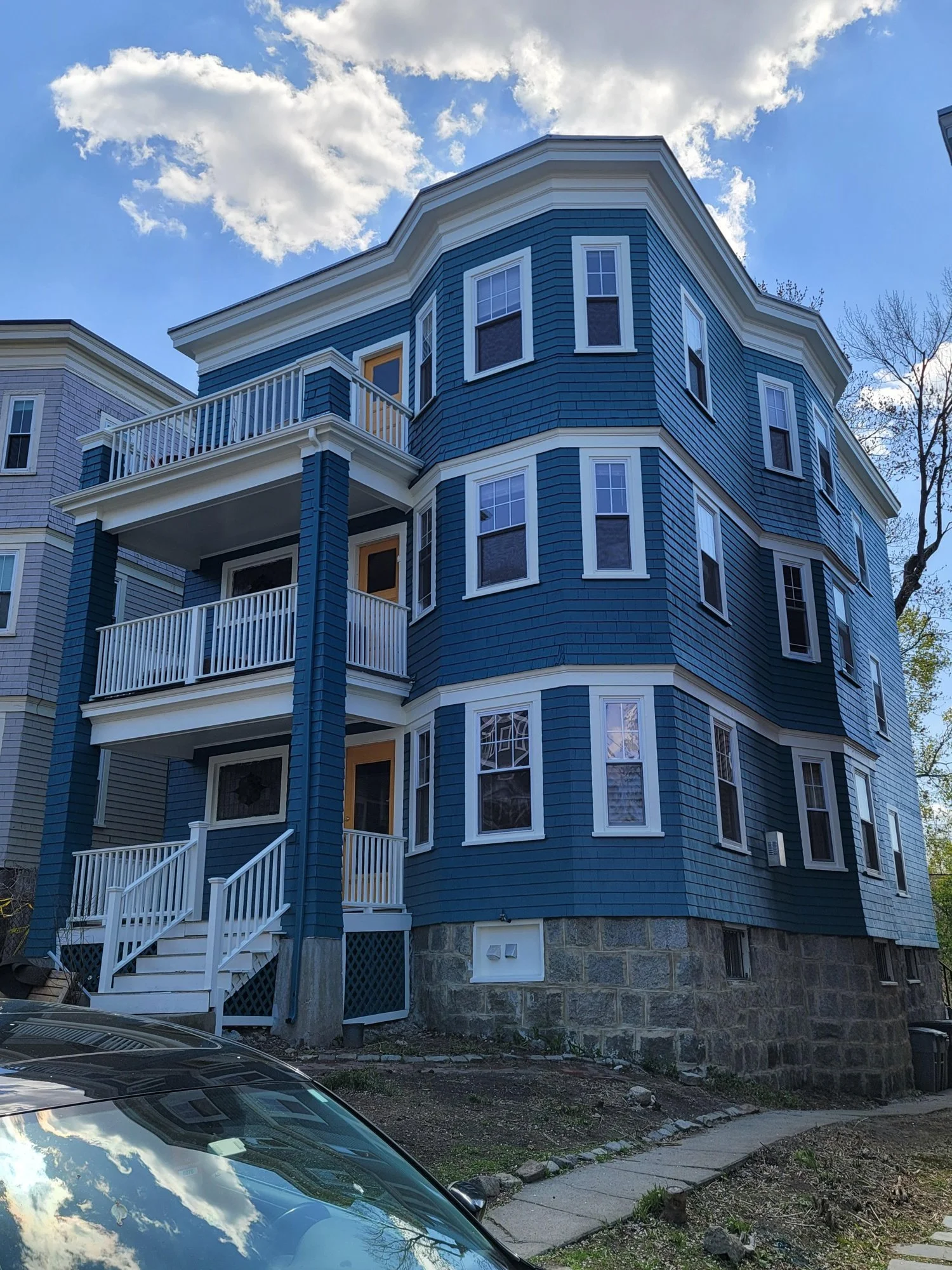
Homeowner Standard
Cost 2 of 3- Every hole and crack filled and sanded flush
- Trim joints caulked, every repair primed
- Two coats of Benjamin Moore
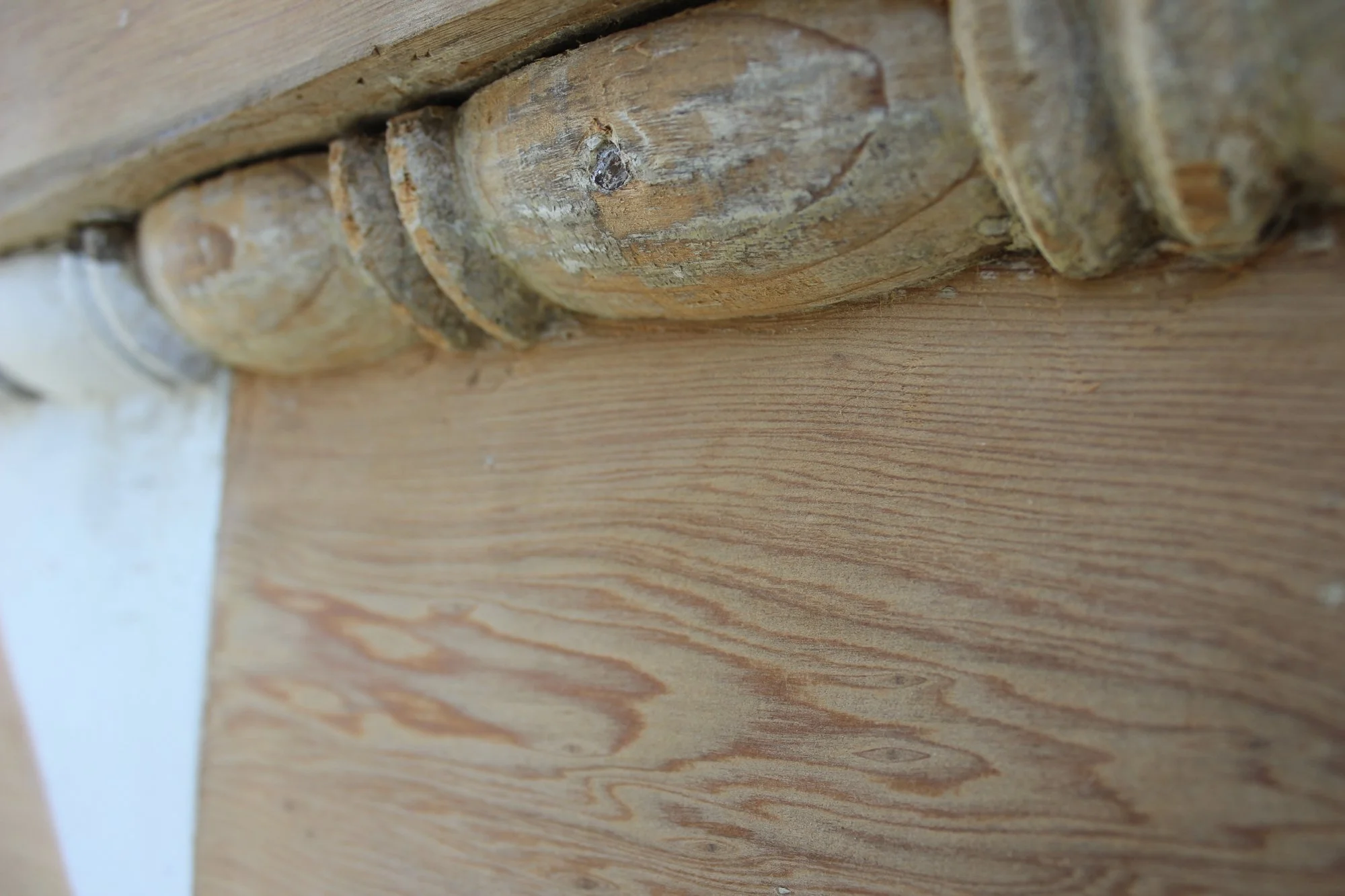
Restoration Grade
Cost 3 of 3- Walls skim-coated to one flat plane
- Trim taken back until profiles are crisp
- Scoped and priced per job
Before the paint
Prep work
Most of a paint job is prep. Tap a word to see what it means.

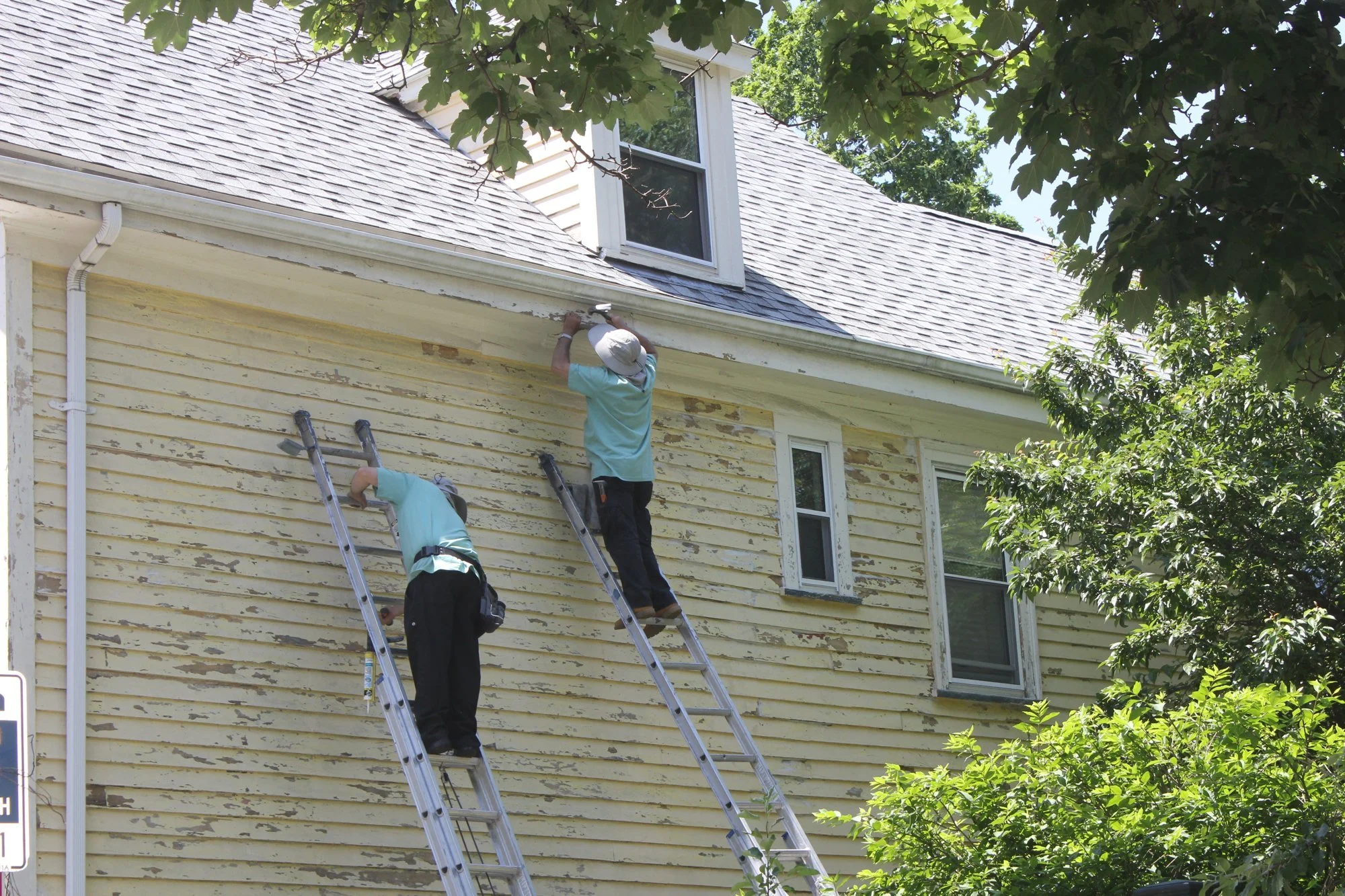
Scraping
Removing loose and failing paint by hand. How far we go is set by your prep level.
Wet scraping
Scraping with the surface misted with water to keep dust down. Required on paint that may contain lead.
Feather sandingChanges your price
Sanding the edge where old paint meets bare wood until you cannot feel the step and the wall reads flat. Homeowner Standard does it at eye-level spots such as the front door surround.
Spot-priming
Priming only the bare and repaired spots, not the whole surface. The default at every prep level.
Full primeChanges your price
Priming the entire surface. Only when the estimate calls for it: a drastic color change, lots of bare wood after scraping, heavy chalking, or stains that could bleed through.
Caulking
Sealing the joints where trim meets wall, or siding meets trim, with a flexible paintable caulk. It closes gaps, keeps water out and makes paint lines sharp.
Spackle
A light filler for nail holes and small dents, sanded flush before priming.
Nail pop
A drywall nail that has pushed out and shows as a small bump or crack. We reset it, fill it and sand it smooth.
Re-floating
Redoing an old patch that shows through the paint: a thin coat of compound over it, sanded flush so the patch disappears.
Skim coatChanges your price
A thin layer of joint compound spread over a whole wall or ceiling and sanded smooth, to hide cracks, rough texture or old patching. Common on Boston plaster after wallpaper removal. See Skim coating.
Level 5 finish
The smoothest wall finish: the whole surface is skimmed so no seams, texture or patches show, even in low, raking light. On old plaster we get the same look with a skim coat.
Containment
Plastic sheeting and barriers that keep dust and debris inside the work area. Standard practice on lead-safe work.
HEPA vacuum
A vacuum with a high-efficiency filter that captures fine dust, including lead dust. A regular shop vacuum spreads it.
Drop cloth
Canvas sheets over floors and furniture. We use canvas on floors because it does not slip or tear.
Masking
Taping and papering off trim, windows, counters, built-ins and hardware so paint goes only where it should.
Soft wash
Cleaning siding with low pressure and a solution that kills mildew and algae, instead of blasting it. Safer for cedar shingle and old wood. See Soft washing.
Pressure washing
Cleaning with a high-pressure spray to remove dirt, chalk and loose paint. The first step of every exterior job; we never wash over fresh caulk. See Pressure washing.
Epoxy repair
A two-part wood filler that rebuilds small soft or damaged spots so they can be sanded and painted. Small epoxy repairs are included in your price; larger rot becomes an Additional Work Order.
Back-priming
Priming the back and edges of a new board before it goes on the house, so moisture cannot get in from behind. We do it on every replacement board. See Carpentry.
What goes on the wall
Paint and primer
Sheen is how shiny the dried paint looks. More shine cleans easier but shows every flaw.
Primer
The first coat. It makes paint stick, seals the surface and evens it out. Paint over bare wood, new plaster or patches without primer tends to look blotchy and fail early.
Sheen
How shiny the dried paint is. More sheen is easier to wipe clean but shows every flaw. Our defaults: flat ceilings, matte walls (a moisture-resistant matte in kitchens and baths), semi-gloss trim and doors.
Low lustre
The soft exterior sheen of Benjamin Moore MoorGard, our standard siding paint. Exterior trim usually gets soft gloss.
Latex (acrylic) paint
Water-based paint. It cleans up with water, stays flexible and is what we use on almost all walls, ceilings and siding.
Alkyd (oil-based) primer
A slower-drying primer that grips bare wood and blocks stains from tannin-rich wood. We use it on bare exterior wood and bare trim.
Coat
One full layer of paint. Homeowner Standard and Restoration Grade get two finish coats over primer. Rental Ready is a one-coat refresh.
Coverage (hide)
How well a coat hides what is under it. A dark-to-light change needs more hide, which is why it may call for tinted primer or an extra coat.
Cutting in
Brushing a clean line where a wall meets the ceiling, trim or another color, before the open wall is rolled.
Wet edge
Keeping the edge of the paint wet while working so each stroke blends into the last. Losing it leaves lap marks.
Back-brushing
Brushing paint into the surface right after it is sprayed or rolled on, pushing it into grain and gaps.
Recoat time
How long a coat needs before the next one goes on, usually two to four hours for our interior paint.
Cure time
About two weeks for paint to reach full hardness. Walls are dry to the touch the same day, but avoid scrubbing them for two weeks.
Color sample
Before we paint, we brush your top three to five colors onto the actual wall or siding so you can see them in daylight and lamplight. What you spend on samples comes off your final invoice.
Color match
We can mix any Farrow & Ball, Sherwin-Williams or other brand color in Benjamin Moore paint. Only have an old can or a chip? We take it to the store and match it.
Low-VOC paint
Paint with very low levels of the solvents that cause paint smell. Our standard interior paint is low-VOC at no extra cost.
Touch-up paint
Leftover paint from your job, labeled by room and color and left with you.
Benjamin Moore Regal Select
Our standard interior paint for walls, ceilings and trim. Cabinets get Benjamin Moore Advance, which levels out to a smooth, hard finish.
Benjamin Moore MoorGard
Our standard exterior paint, a flexible acrylic that handles Boston's swings between hot summers and freezing winters.
Benjamin Moore Aura ExteriorChanges your price
Our premium exterior option for maximum durability on sunny walls.
What we look for
Paint problems
What it is, why it happens, and what we do about it.

| Problem | Why it happens | What we do |
|---|---|---|
| Peeling and flaking | Why: Moisture or poor adhesion under the paint. | What we do: Scrape it off before painting, or the new coat fails with it. |
| Chalking | Why: Years of sun break down the paint into a powder. | What we do: Wash it off. Heavy chalking may call for a full prime. |
| Alligatoring | Why: Many old layers, or hard paint over soft paint, crack in a scaly pattern. | What we do: Scrape and sand back to sound paint. On plaster the same pattern is map cracking, often a skim coat job. |
| Blistering | Why: Moisture or heat trapped under the paint film. | What we do: Find the cause, scrape the blisters, prime and repaint. |
| Tannin bleed | Why: Natural oils in cedar and redwood stain through paint. | What we do: Seal with a shellac primer before painting. |
| Mildew | Why: Shade and damp, worst on north-facing walls. | What we do: Kill it, rinse it, then prime. See Mildew treatment. |
| Efflorescence | Why: Moisture moving through brick, stucco or foundations leaves white salt. | What we do: Brush and wash it off and let the wall dry before coating. |
| Flash rust | Why: Freshly sanded iron meets the air. | What we do: Prime iron the same day it is sanded. See Wrought iron railings. |
| Wood rot Changes your price | Why: Water gets into bare wood at sills, board ends and trim. | What we do: Cut it out and replace it before painting. See Carpentry. |
| Lap marks | Why: Wet paint laid over paint that had started to dry. | What we do: Keep a wet edge and paint wall by wall. |
| Holidays | Why: Painters' word for missed or thin spots in a coat. | What we do: Our final walkthrough checks every room for them. |
| Flashing | Why: Repairs soak up paint differently, leaving shiny or dull patches. | What we do: Spot-prime every repair before the finish coats. |
What our clients say
“Team did an amazing job painting our south end condo. Ryan was communicative and professional throughout the process. Prices were fair, especially given the quality of work.”
“Ryan and his team did an excellent job on an interior painting project for my condo in JP. I appreciated how convenient it was to schedule the estimate and make payments using their online system. The quality of the work was outstanding and the newly painted rooms look great. I will definitely call Ryan again when I need painting work done in the future.”
“Ryan was fantastic to work with from start to finish. They did beautiful work in our daughter's bedroom for an affordable price and we plan to hire them again for our next projects.”
Built before 1940
Old Boston homes
Plaster, lath and triple-deckers: what makes painting here different.

Horse-hair plaster
The original walls in most Boston homes built before the 1940s: lime plaster mixed with animal hair, spread over wood strips. Hard, dense and slightly wavy, and worth keeping when it is sound. See Horse-hair plaster restoration.
Lath
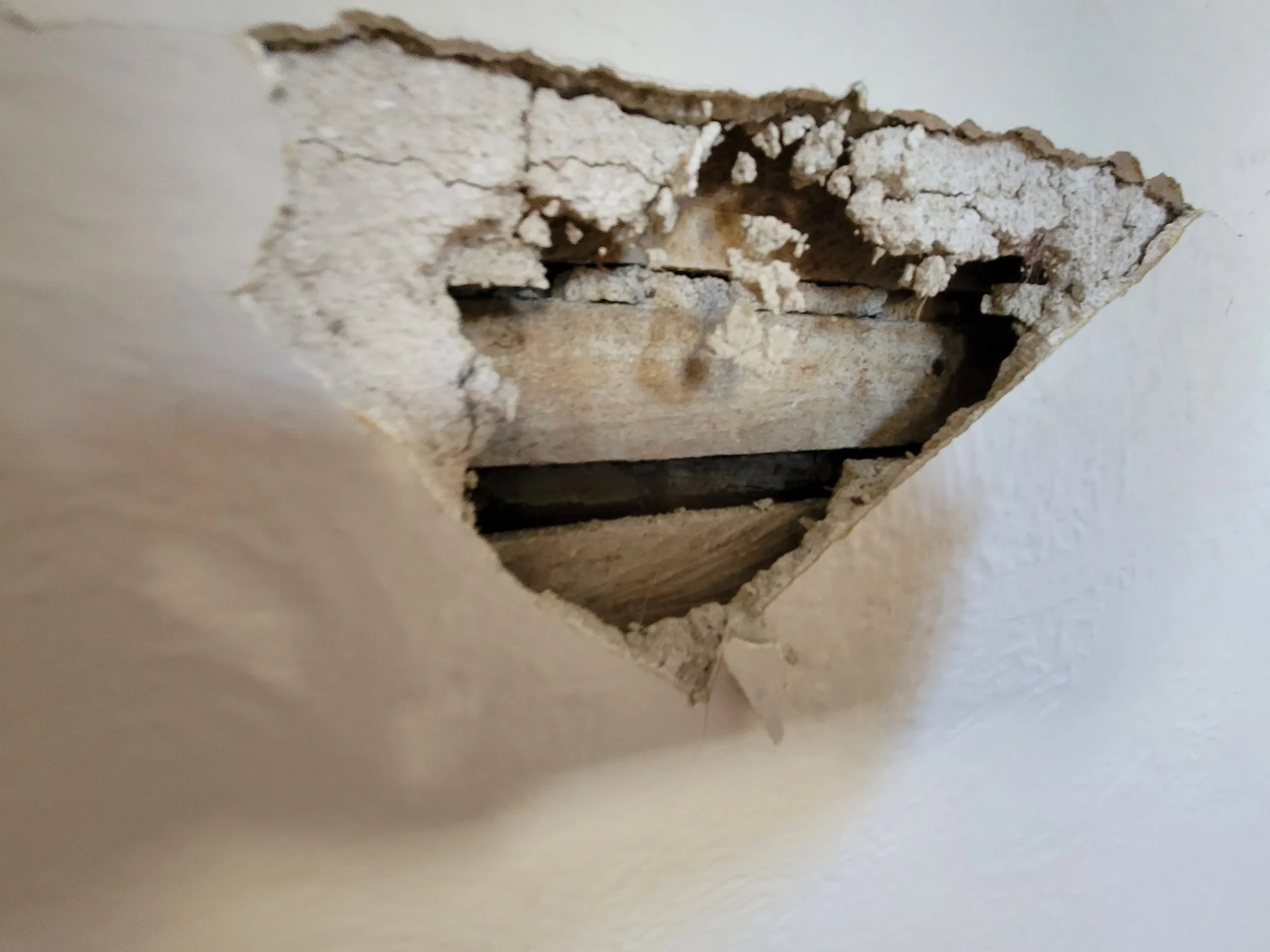
The thin wood strips nailed to the framing that old plaster is spread onto, as in the photo.
Plaster keys
The plaster that squeezed through the gaps in the lath and holds the wall on. When keys break, plaster bulges or sags and feels spongy when pressed.
Delamination
Plaster separating from the lath because its keys have broken. Small areas are reattached with plaster washers and skimmed; large areas may need replacing.
Plaster washers
Small perforated discs screwed through loose plaster into the lath to pull it tight before patching.
Drywall
Gypsum board, the standard wall material since the mid-1900s. Most repairs on newer walls are drywall patches. See Drywall and plaster repair and Drywall installation.
Popcorn ceiling
A bumpy sprayed ceiling texture common from the 1950s to the 1980s. It can be scraped off and the ceiling skimmed smooth. If your home was built before 1985, test the texture for asbestos first. See Popcorn ceiling removal.
Clapboard
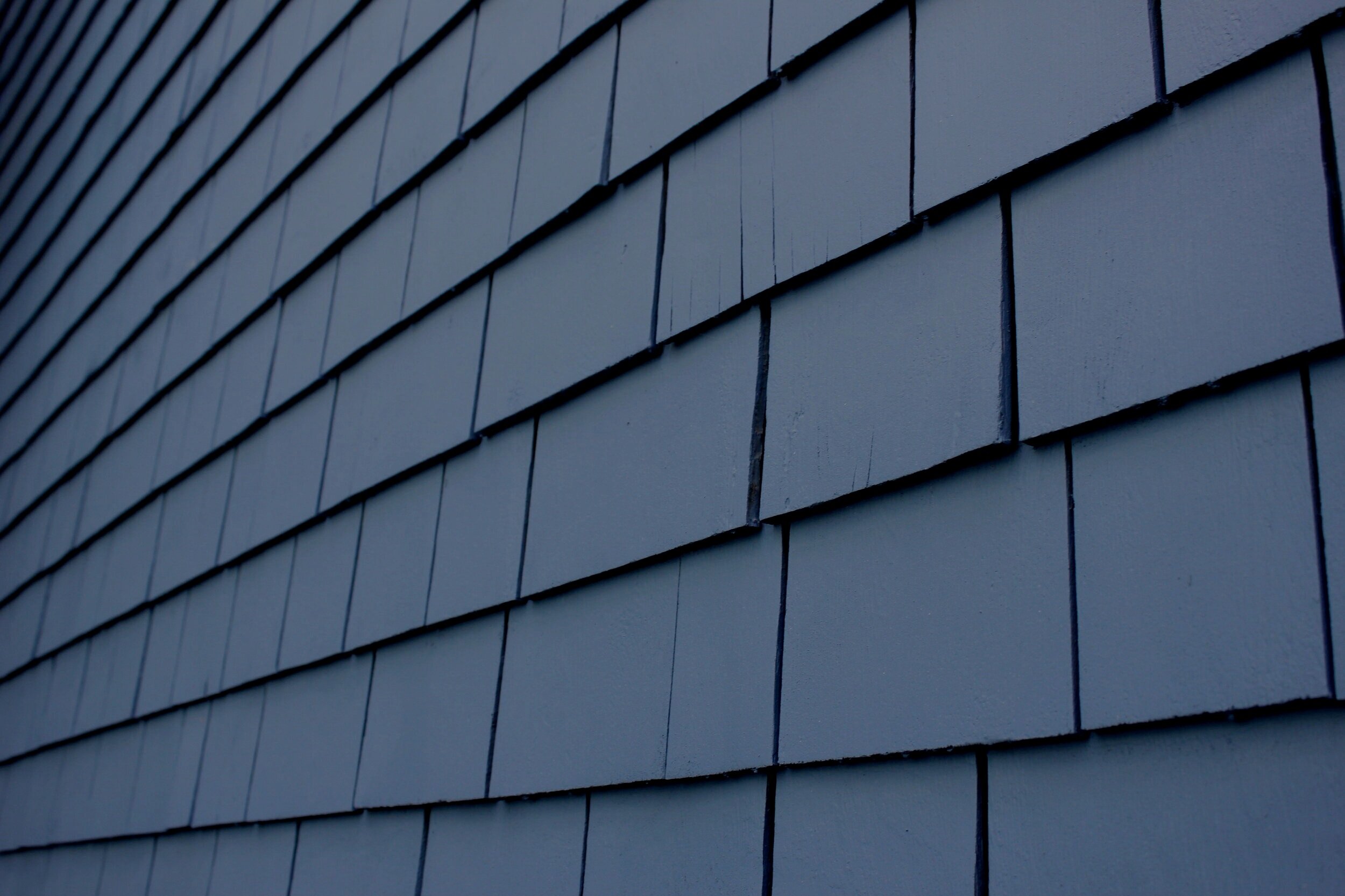
Long horizontal wood boards that overlap like steps: the classic siding on triple-deckers and older homes.
Cedar shingle
Individual cedar shingles, often on Capes and coastal houses. They need a gentle wash, never high pressure, and a stain-blocking primer if painted for the first time.
Triple-decker
Boston's three-family house, one unit per floor, usually clapboard with stacked porches. Three stories of siding and porches make access and staging a big part of the price. See Triple-decker painting.
StagingChanges your price
Ladders, ladder jacks and planks, or scaffolding that let painters reach upper stories safely. Tall or tight sites need more of it.
Trim
The wood around windows and doors, baseboards, crown molding and the boards at the corners and edges of a house. See Trim and molding painting.
Porch floor
Painted porch decking, which takes foot traffic and weather and needs a floor paint. Stained decks are a separate job; so are fences. See Porch floor painting, Deck staining and Fence staining and painting.
Most of Boston
Lead safety
Homes built before 1978 are treated as if they have lead paint until tested.
Pre-1978 home
Lead paint was banned for homes in 1978. A home built before then is presumed to have lead paint somewhere unless testing shows otherwise, and that is most of Boston.
RRP rule
The federal Renovation, Repair and Painting rule. It sets how contractors must work when they disturb more than 6 square feet of painted surface per room inside, or 20 square feet outside, in a pre-1978 home. See Lead-safe painting.
Lead-safe renovation license
In Massachusetts the license comes from the state Department of Labor Standards, not the EPA. Ryan Painting holds Lead-Safe Renovation Contractor license LR4720.
Certified Renovator
A person trained and certified in lead-safe work practices. One is assigned to every lead-safe job.
Renovate Right
The EPA pamphlet we give you before lead-safe work starts. It explains the hazards and how the work protects your family.
Cleaning verification
The final check on a lead-safe job: surfaces are wiped with damp cloths and compared to an EPA card, and cleaning is repeated until they pass.
Deleading
Permanently removing or covering lead hazards so a home meets the Massachusetts Lead Law, which matters when a child under six lives there. It is done by licensed deleaders. We do lead-safe painting, not deleading, and will point you to a deleader if you need one.
Exterior work
Weather and timing
Exterior painting temperature
The paints we use outside can go on when the air and the surface are as cold as 35°F. We prefer 45°F and rising, because paint that dries in mild weather levels out and bonds better.
Dew point
The temperature at which moisture condenses on a surface. If a wall is close to it, wet paint collects dew and can fail, which is why crews often start a little later on cool mornings.
Exterior season
In Boston, mid-May to mid-October is the reliable window for exterior painting. Spring dates fill first. See Exterior painting.
Weather delay
Exterior work stops for rain, high wind or cold. If we move your dates for weather, rebooking costs you nothing.
About warranties
No fine print. Just a phone call.
On older surfaces we do not offer a formal written warranty, and we would rather tell you why than hide it in small print.
Most of what we paint in Boston is decades old: horse-hair plaster from the 1920s, clapboard under six or eight layers of paint, trim that has seen a century of winters. However carefully we prep, an old surface can move, crack or let go underneath for reasons no painter controls. A warranty full of exclusions would not protect you, so we do not pretend it does.
New work is different. When we paint an entirely new surface, such as new drywall, new siding or new trim, we can offer a written warranty. Ask us about it with your estimate.
For everything else, what we offer is simple. We are a local company that lives on its reputation and on referrals from neighbors. If something we painted is not right, call us and we come back, look at it with you and set it right.
Call (617) 804-5300
Have a word that isn't here?
Send it to us, or ask at your walkthrough. If you are planning a larger project, the best next step is a free consultation: we walk the house with you and you get an estimate that uses every word on this page the way it is defined here.
Six rooms or fewer? Price them online in minutes.
Related: Interior painting · Exterior painting · What painting costs in Boston